
Digital Menu Boards for Restaurants in Manchester: Installation and Costs
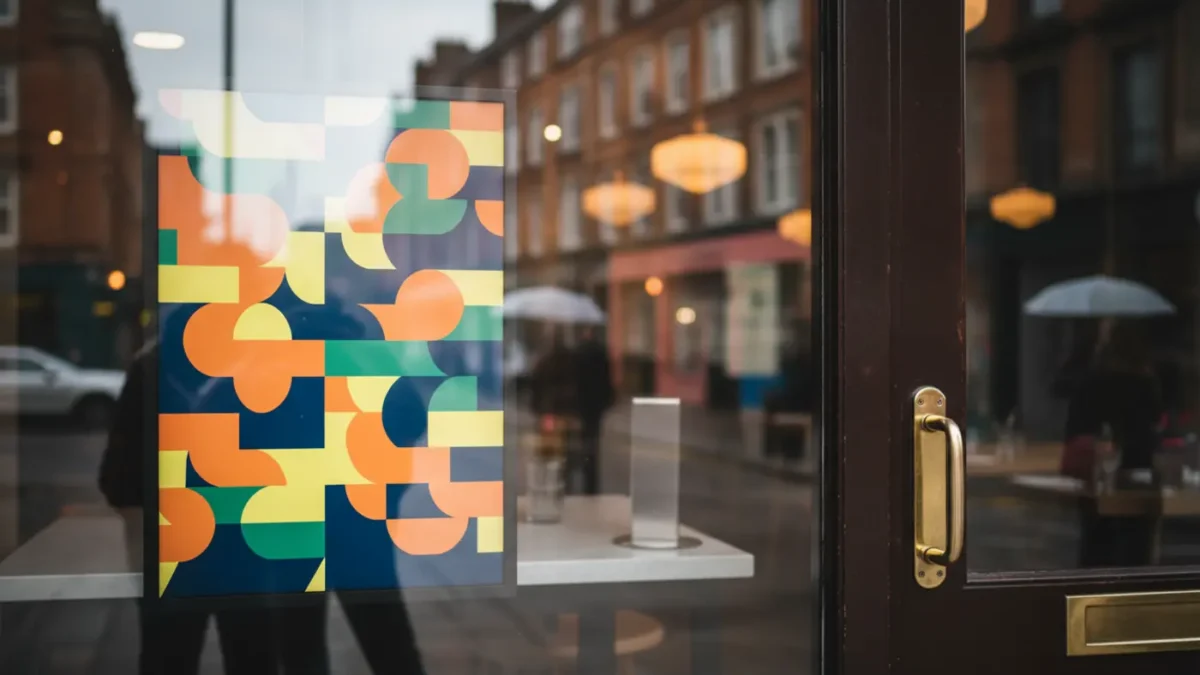
Thinking about upgrading to digital menu boards in your Manchester restaurant? Good. Printing new menus every time you change a price is not a strategy. It is chaos with a laminator.
Let’s be real. Customers expect sharp screens, moving visuals, and clear allergen information. Not a faded poster stuck on the wall like it is 2008.
If you run a restaurant in Manchester, you are competing with serious operators. Digital menu boards are not a gimmick anymore. They are the standard. The real question is this. Are you using your menu to sell, or just to list food?
Digital Menu Boards For Restaurants In Manchester
Obviously, flexibility is the big win. Change a price. Push a lunch deal. Remove a sold out item. Done in seconds. No reprint costs. No waiting around.
Here’s what’s actually happening. Food costs change fast. Suppliers increase prices. Margins get tight. Static menus cannot keep up. A proper digital menu board system with central CMS control lets you update every screen at once. One click. All screens updated. That is control.
Then there is upselling. Motion graphics and high brightness screens make premium dishes stand out. Research highlighted in digital signage studies shows higher engagement compared to static displays. Engagement means attention. Attention means higher spend. This is not hype. It is basic buying behaviour.
And yes, customers notice. Manchester is packed with modern dining brands. If your place looks outdated, people assume your standards are too. Harsh. But true.
Types Of Digital Menu Boards For Restaurants In Manchester
Cut the nonsense. Not all digital menu boards are equal. A cheap office television is not the same as a commercial LED Scoreboard Screen for football matches. One is built for a few hours a day. The other is built to run long shifts without failing.
1. Static Digital Screens
These show fixed images. Think of them as a slideshow version of your printed menu. Clean. Simple. Limited. Fine if you just want better visuals.
2. Dynamic Digital Menu Boards
This is where it gets interesting. Animated transitions. Time based scheduling for breakfast, lunch, and dinner. Automatic price updates. This is what serious Manchester restaurants choose because it drives revenue.
3. Interactive Displays And Kiosks
Touchscreen ordering. Allergen filters. Upsell prompts. Ideal for quick service sites and high footfall areas near Manchester Arndale or transport hubs. If speed matters, this matters.
The right choice depends on layout, ceiling height, lighting, and customer flow. A proper site survey is essential. Guessing leads to glare, poor angles, and regret.
Key Features To Look For In A Digital Menu Board System
Come on. If you are investing, do it properly.
- Commercial grade LED screens
- Cloud based CMS
- POS integration support
- Allergen information filters
- Remote content scheduling
- High brightness displays
- Secure network connectivity
The CMS matters more than the screen. Stop obsessing over 4K if the software is painful to use. You need simple drag and drop updates, multi screen control, and remote access. If your team cannot change a price in under a minute, the system is the problem.
Also think about network setup. If your WiFi drops every afternoon, your screens will too. Structured cabling and stable connectivity are part of a professional installation. Screens freezing during the lunch rush is not a good look.
How Installation Works In Manchester Restaurants
Here is how a proper installation works.
First, a site survey. Measurements. Power checks. Wall structure review. Manchester units range from new builds to old brick properties. Treat them the same and you will pay later.
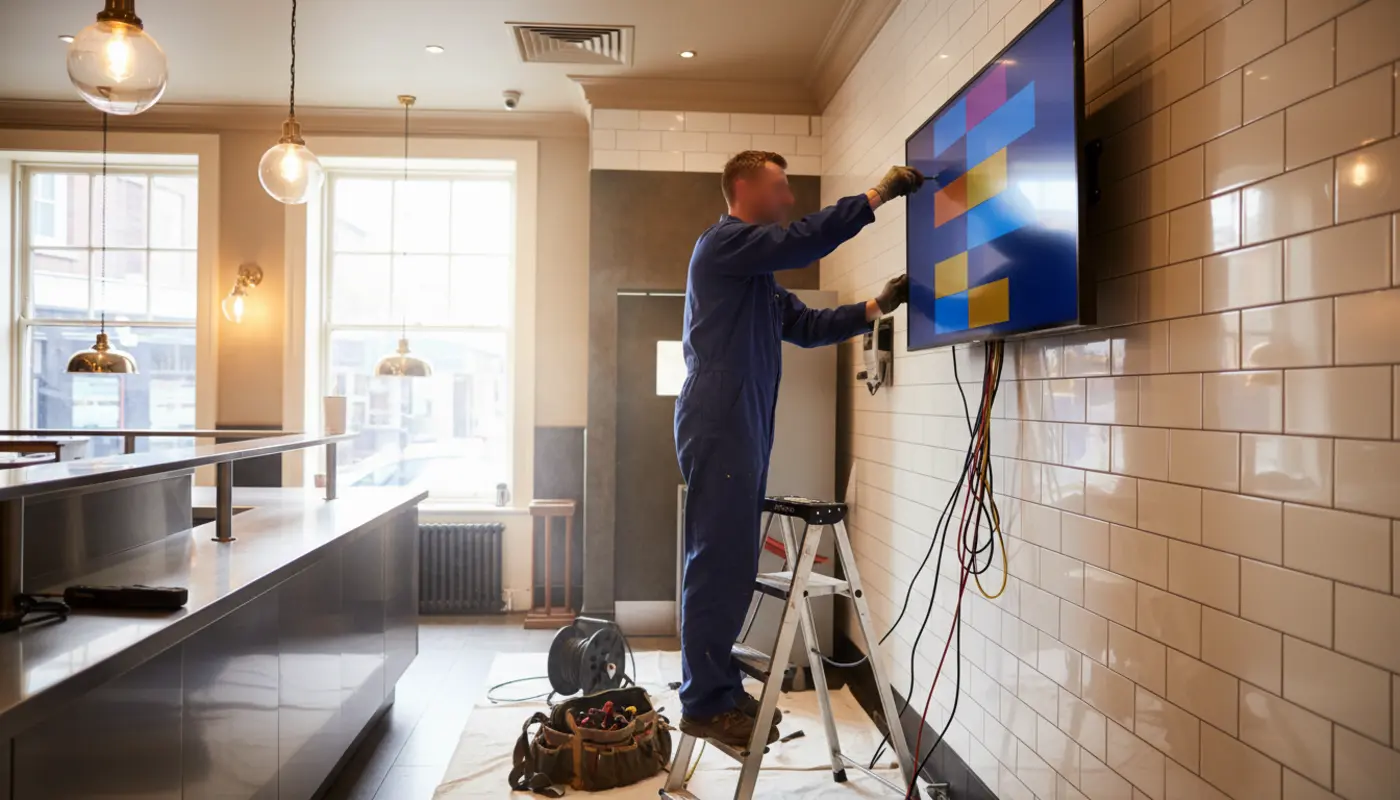
Second, mounting and cabling. Commercial brackets. Concealed wiring. Safe power supply. No messy trunking hanging down.
Third, CMS setup and testing. Content loaded. Scheduling set. Staff trained. If your team cannot use it, it is just expensive wallpaper.
A professional team handles supply, CCTV installation, and CMS setup in a planned visit where possible. Fully insured. Properly organised. No chaos.
Planning Permission And Compliance In Greater Manchester
Now the boring bit. Ignore it and you will regret it.
Internal digital menu boards usually do not need planning permission. External signage is different. Brightness and placement are checked under UK advertising rules. Manchester City Council provides guidance on shopfront signage. Check before installing.
Also consider electrical safety and fire compliance. Screens are electrical equipment. Proper installation reduces risk and protects staff and customers.
Average Costs Of Digital Menu Boards For Restaurants In Manchester
Let’s talk money.
Commercial screens start around £2,000 each. Larger high brightness panels range from £4,000 to £8,000 per screen, depending on size and spec. That is the real starting point.
Installation in Manchester usually adds £500 to £2,000 depending on cabling and complexity. If someone quotes a very low price, ask what is missing.
Then you have CMS subscription fees. Expect roughly £20 to £60 per screen per month. Yes, it adds up. But so does reprinting menus and paying staff to swap boards.
Stop pretending you can do this properly for £800 in total. That is not saving money. That is cutting corners.
Ongoing Maintenance And Software Costs
Digital does not mean maintenance free.
You need software updates, occasional hardware checks, and proper content management. Budget a few hundred pounds per year for support if you value stability.
Train your staff as well. If nobody knows how to update the menu, what was the point? Do you really want a Christmas promotion still running in February?
Choosing A Manchester Installation Company
Look for companies with real hospitality experience. Not someone who usually mounts televisions in living rooms.
Ask for:
- Previous restaurant projects
- Recognised commercial display brands
- Clear cost breakdowns
- Aftercare support
- CMS training included
Get everything in writing. Scope. Timeline. Warranty. Basic business discipline avoids arguments later.
Meeting UK Allergen Labelling Laws With Digital Menu Boards
This one is serious. Under UK food regulations, you must provide clear allergen information.
A digital system lets you update allergen data across every screen instantly. Remove an ingredient. Update the label. Done. No crossed out paper inserts.
You can also add allergen filters on interactive displays. Customers check for themselves. That reduces staff error and protects your business. One allergen mistake is not just embarrassing. It is dangerous.
If you are still relying on a ring binder behind the counter, you are taking risks you do not need.
Is It Worth The Investment For Manchester Restaurants
Straight up. Yes, if you use it properly.
Dynamic menu boards increase average order value through visual upselling. Highlight premium dishes. Promote add ons. Schedule time based offers. Test what works and remove what does not.
They also reduce printing costs and staff time. Over two to three years, many restaurants see the system pay for itself.
But here is the truth. Install digital screens and never update the content, and you have bought very expensive wallpaper.
Use the system. Analyse what sells. Adjust promotions. Treat the menu like a sales tool. That is how you get real return.